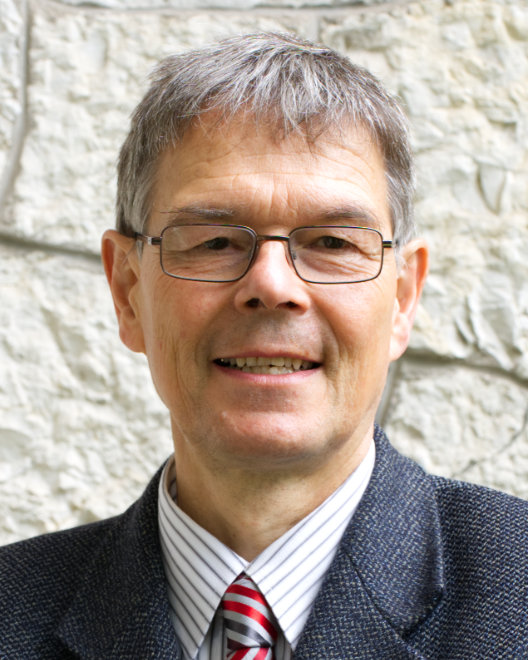
Agency, Intelligence, and Reasons in Animals
Hans-Johann Glock (Philosophy, Zürich)
Login details for zoom:
Zoom-Link: https://us02web.zoom.us/j/89050362754?pwd=L3VWMlRrWWl6blRnMnVlcjRqam5Jdz09
Meeting-ID: 890 5036 2754; Password: 5h9ax2


Hans-Johann Glock (Philosophy, Zürich)
Login details for zoom:
Zoom-Link: https://us02web.zoom.us/j/89050362754?pwd=L3VWMlRrWWl6blRnMnVlcjRqam5Jdz09
Meeting-ID: 890 5036 2754; Password: 5h9ax2
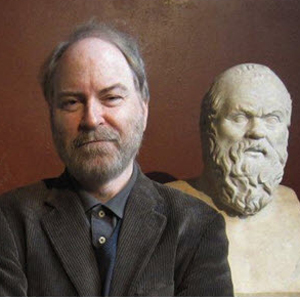
Shaun Gallagher (Memphis, Philosophy)
01.12.2020 – 15:00- 16:30 – online via zoom
Zoom-Link: https://us02web.zoom.us/j/83601592315?pwd=YktSMWs3VDIzZHRIWjA0SEZHemVDUT09 Meeting-ID: 836 0159 2315; Password: pS9x70
Dr. Sabrina Coninx & Prof. Dr. Albert Newen
Interdisciplinary Reading Club & Colloquium: Recent Debates on Situated Cognition
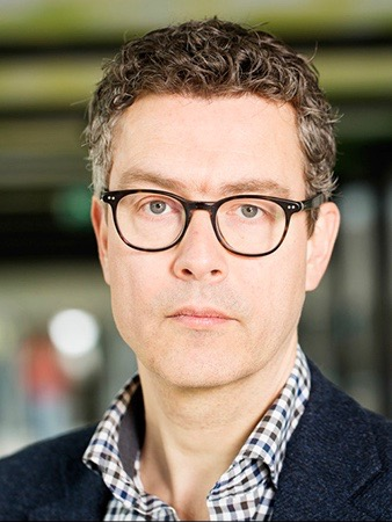
Marc Slors (Radboud, Philosophy)
24.11.2020 – 14:00 – 15:30 – online via zoom
Zoom-Link: https://us02web.zoom.us/j/85618798486?pwd=SWhDanA5ZFp3anY1TCtoVSs0K3Judz09 Meeting-ID: 856 1879 8486; Password: K86RgY
Dr. Sabrina Coninx & Prof. Dr. Albert Newen
Interdisciplinary Reading Club & Colloquium: Recent Debates on Situated Cognition
Felipe De Brigard (Duke University)
Times imagined and remembered.
26.11.2020, 16:15-17:45 CET (UTC+01:00).
Online Lecture via zoom.
Login information:
Zoom:
https://us02web.zoom.us/j/82970505769?pwd=NGpHL3VHUUg0bktTbnBIT2kxMWVYZz09
Abstract: Recent evidence suggests that episodic memory, episodic counterfactual and episodic future thinking share common cognitive and neural mechanisms. Some researchers interpret these findings as supporting the more general claim that these three kinds of mental simulation recruit common neural structures because they share an adaptive purpose, namely to enable simulating possible events in order to hedge future uncertainty. But how exactly do these simulations help us at a later time? One possibility, inspired by the work of D.H. Ingvar, is that these kinds of mental simulations serve their future-oriented role only if one is able to properly recall them when the right time comes. These “memories for the future”, as Ingvar called them, have just recently become the object of experimental investigation. In this talk, I seek to contribute to this nascent literature by discussing how we encode and retrieve temporal information from episodic simulations.

Anja Berninger (Universität Stuttgart)
Collective memory, emotions and commitments.
19.11.2020, 10:00-11:30 CET (UTC+01:00).
Online Lecture via zoom.
Login information:
Zoom:
https://us02web.zoom.us/j/82970505769?pwd=NGpHL3VHUUg0bktTbnBIT2kxMWVYZz09
Abstract: It is a relatively common claim both in history and cultural studies that not only individuals, but also large groups of people such as religious communities or whole nations have some form of memory. Thus, for example, it is suggested that Germans remember the fall of the Berlin Wall, Americans remember the Vietnam war etc. These (and similar) cases are frequently discussed under the heading “collective memory”. From a philosophical perspective, two questions come up with respect to this phenomenon: Is it really memory that we are talking about here? And, if yes, what sort of memory is it? In response to these questions, I suggest that we should interpret most of these cases as involving semantic memory. Yet, as I will highlight in the first section of my talk, not just any form of collective semantic memory would count as collective memory in the historian’s sense of the term. I suggest that two further ingredients need to be integrated to characterize the form of memory we are after: First of all, I will suggest that this type of memory has an emotional component. Secondly, I will argue that there is a specific commitment structure associated with the type of memory in question. I use the rest of the presentation to spell out both aspects in more detail.