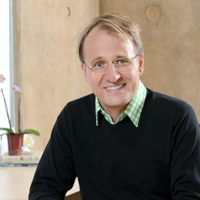
Carlos Montemayor (San Francisco State University)
Transactional collective memory.
04.02.2021, 16:15-17:45 CET (UTC+01:00).
Online Lecture via zoom.
Login information:
Zoom:
https://us02web.zoom.us/j/82970505769?pwd=NGpHL3VHUUg0bktTbnBIT2kxMWVYZz09
- Meeting ID: 829 7050 5769
- Password: 8rraW0
Abstract: In previous work, I argued that the distinction between access and phenomenal consciousness plays a normative role in memory. Memories that are episodically recalled in order to act, decide, and plan are not necessarily phenomenally conscious, and they play a truth-conducive or epistemic role. By contrast, memories that have a rich phenomenal profile on the basis of their experienced vividness and salient value in our personal narrative play a moral and aesthetic role. These two roles are not incompatible and interact in various ways, although they are dissociable. In this talk, I explore this distinction in the counterintuitive context of collective memory. I shall argue that this normative difference is more general than its psychological association with consciousness—it is a feature that depends on meaning-making memories versus mere memory reports. The contribution of this approach is that while the phenomenology of memory is subjectively crucial for the saliency of memories, it is insufficient to explain the general distinction between meaningfully narrative and merely episodic memories. More precisely, while phenomenology provides familiarity with our past, the difference between meaning-making and episodic memories is more general than the familiarity provided by phenomenology, and it requires an independent account. Topics in historiography and legal evidence are explored to assess various options, showing the advantages of a unified transactional approach to individual and collective memories.
Sven Bernecker (Universität zu Köln)
The moral excusability of forgetting.
28.01.2021, 10:00-11:30 CET (UTC+01:00).
Online Lecture via zoom.
Login information:
Zoom:
https://us02web.zoom.us/j/82970505769?pwd=NGpHL3VHUUg0bktTbnBIT2kxMWVYZz09
- Meeting ID: 829 7050 5769
- Password: 8rraW0
Abstract: Does moral ignorance due to forgetting exculpate wrongdoing? Could an agent be blamelessly ignorant of, say, the fact that one ought to be tolerant of differences; or would such an ignorance always imply a lack of good will? I argue that the debate about the exculpation of forgetting-based moral ignorance suffers from two defects. First, the debate does not first consider the rules for which morally relevant memory behaviors we ought to perform and avoid. Second, the debate lacks a proper understanding of the processes by which people forget the difference between right and wrong. When we examine the processes by which people remember or forget the correct moral theory or acquire a twisted one, we see that excuses are not binary but gradable: they can be weaker or stronger, mitigating blame to greater or lesser extent (Sliwa 2020). This paper argues that moral ignorance (due to forgetting) may well excuse but not exculpate — it may lessen the blameworthiness of a forgetting-involving wronging but not so much as to warrant forgiveness.

Markus Werning and Kristina Liefke (Ruhr-Universität Bochum and Goethe-Universität Frankfurt am Main/Ruhr-Universität Bochum)
Remembering dreams: The problem of reference in memories of non-veridical experiences.
21.01.2021, 16:15-17:45 CET (UTC+01:00).
Online Lecture via zoom.
Login information:
Zoom:
https://us02web.zoom.us/j/82970505769?pwd=NGpHL3VHUUg0bktTbnBIT2kxMWVYZz09
- Meeting ID: 829 7050 5769
- Password: 8rraW0
Abstract: Episodic memories are widely assumed to be factive: Saying that somebody remembers something presupposes that the ascribed mnemonic content is true and the descriptions used to express it have existing referents. In this respect the verb “remember” aligns with ordinary uses of perceptual verbs such as “see” and “hear””. The Causal Theory of Memory (Martin & Deutscher, 1966, Bernecker 2010) promises to explain the factivity of memory in two steps: (i) In the original perception a causal chain results in a categorial representation of the perceived object. (ii) The so obtained reference relation is passed on from the perception to the remembering event by a memory trace, which extends the causal link and transmits categorial representational content. Theories that deny the necessity of a content-preserving memory trace, such as Simulationism (Michaelian 2016) and Trace-Minimalism (Werning, 2020), prima facie, fare worse in explaining the reference relations of memories. However, this assessment changes when one also considers memories of non-veridical experiences such as dreams. Here causal links to their (counterfactual) intentional objects are typically not available. Still anaphoric reference relations between memory and dream content seem to hold. Even correctness conditions apply. It is possible to misremember what you have dreamt. In line with Blumberg (2018), we develop a parasitic account of the reference relations of mnemonic contents: Memories are referentially fully dependent on the original experiences, be they veridical or not. To establish this view, one only needs to single out the experience in question by an appropriate causal link to the remembering event. A transmission of categorial representational content is not necessary. The resulting view is in accordance with Trace-Minimalism.

Jordi Fernández (University of Adelaide)
Memory and imagination are different propositional attitudes.
14.01.2021, 10:00-11:30 CET (UTC+01:00).
Online Lecture via zoom.
Login information:
Zoom:
https://us02web.zoom.us/j/82970505769?pwd=NGpHL3VHUUg0bktTbnBIT2kxMWVYZz09
- Meeting ID: 829 7050 5769
- Password: 8rraW0
Abstract: In this talk, I will argue for the view that episodic memory and sensory imagination are different types of propositional attitudes. First, I consider two plausible views about the content and attitude involved in remembering episodically. On one of those views, episodic remembering consists in taking a certain state of affairs that one perceived to be in the past. On the other view, remembering consists in taking a perception of that state of affairs to have caused the experience that one is currently having. Next, I offer a proposal about the content and attitude involved in imagining sensorily. Essentially, the proposal is that, when one imagines a state of affairs in virtue of having some mental image, one takes it to be possible that one could perceive that state of affairs, and that if one perceived it, one would have an experience which is phenomenologically similar to having the mental image that one is currently having. Finally, I highlight the differences which, on either of the two views about memory, separate memory from imagination, and conclude that memory and imagination are distinct propositional attitudes.
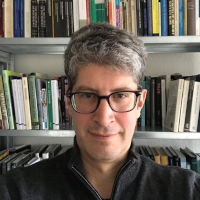
Fabrice Teroni (Université de Genève)
Emotions and memory.
17.12.2020, 10:00-11:30 CET (UTC+01:00).
Online Lecture via zoom.
Login information:
Zoom:
https://us02web.zoom.us/j/82970505769?pwd=NGpHL3VHUUg0bktTbnBIT2kxMWVYZz09
- Meeting ID: 829 7050 5769
- Password: 8rraW0
Abstract: Pre-theoretically, it seems obvious that there are deep and multifarious relations between memory and emotions. On the one hand, a large chunk of our affective lives concerns the good and bad events that happened to us and that we preserve in memory. This is one amongst the many ways in which memory is relevant to the nature and causation of emotions. What does recent research teach us about these relations? In the first part of my talk, I shall consider three issues pertaining to these relations. a) Are there types of emotions that are exclusively related to memory? This issue concerns the individuation of emotion types. b) Do emotions in general have privileged links with types of memory (e.g., perceptual memory)? This is a question about the format of representation in emotion. c) Do emotional evaluations have privileged links with memory? This issue concerns the way in which the evaluative aspect of the emotions is realized in the subject’s psychology. On the other hand, which events we happen to preserve in memory very much depends on how we affectively reacted to them when they took place. Emotions are relevant to the nature and causation of memory in this and many other ways. The second part of my talk surveys four issues regarding these relations. a) Is there a relation between the formation of memories and emotions? This is the issue of selectivity, which concerns the role of emotions at the time of encoding. b) Is there a relation between the capacity to access a memory and emotions? This question targets the role of emotions at the time of remembering and relates to the phenomenon of “mood congruence”. c) Is there a type of memory content that is distinctively related to the emotions? This is the issue of affective memories and their nature. d) Is the attitude of remembering (as opposed to what one remembers) emotional in nature?